E-Bike vs. E-Scooter for Distance Commutes: Real-World Pros and Cons

There is a great difference between making a short trip around the neighborhood and commuting over long distances. If you have to travel several miles each day to work, school, or another destination, factors like battery range, comfort, reliability, road conditions, and the need for charging become far more important.
This is where the choice between an e-bike and an e-scooter becomes interesting.
Both can serve as good alternatives to driving, but they offer different riding experiences. E-scooters are compact, easy to store, and convenient for short urban journeys. E-bikes are usually more comfortable for longer distances and let you pedal if you want to save battery or get some exercise.
So, which one is better for a long-distance commute in 2026?
The answer depends on your route and priorities. Let’s compare the real-world advantages and disadvantages of each.
E-Bike vs. E-Scooter for Long Commutes
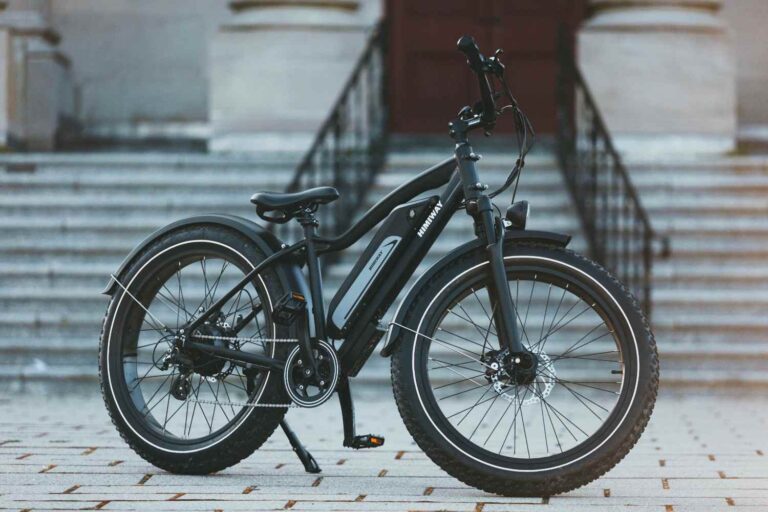
For long trips, an e-bike generally has the advantage thanks to its bigger wheels, more comfortable seating position, pedal assistance, and ability to carry more equipment.
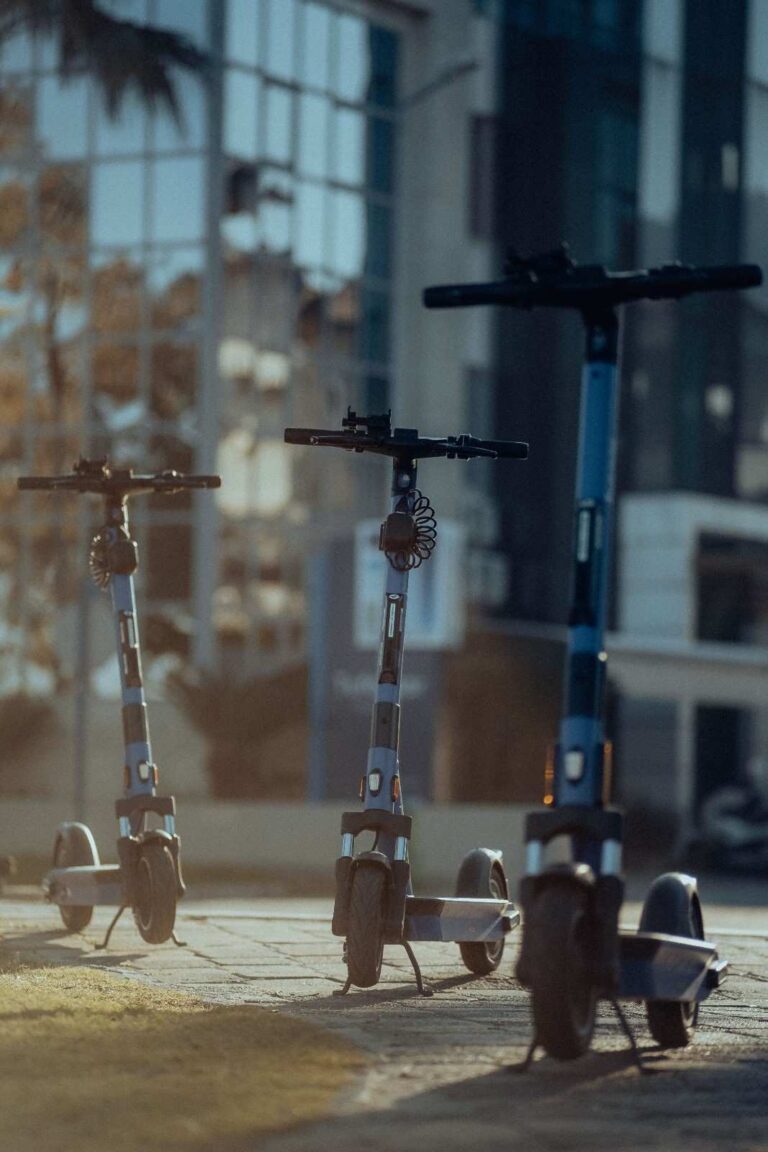
E-scooters have certainly become much better. Nowadays, long-range models can travel long distances, and better suspension, larger tires, and more efficient batteries make certain scooters considerably more comfortable than older ones.
What matters is not relying entirely on the manufacturer’s stated range, since the rider’s weight can affect actual range, along with hills, wind, temperature, speed, tire pressure, and how aggressively the motor is used.

E-Bikes: Pros for Long-Distance Commuting
1. More Comfortable for Long Rides
One of the biggest advantages of an e-bike is the riding position.
Throughout the journey, you stay seated on a saddle rather than standing, which makes a difference when your commute is 30 minutes, 45 minutes, or even longer.
Larger bicycle tires generally cope better with cracks, potholes, and uneven surfaces than the small wheels commonly found on scooters.
For a person who has to travel long distances every weekday, comfort is just as important as battery range.
2. Better for Hills
Hills can quickly show where an electric vehicle falls short.
A good e-bike links motor assistance with your own pedaling, helping you climb hills more efficiently. You can also adjust the level of assistance to match how much effort you want to put in.
It is particularly useful for long commutes with several climbs.
E-scooters fitted with a powerful motor can also climb hills, but there is a great deal of variation between models; a scooter that performs well on level roads may struggle on a long or steep slope.
3. Greater Range Flexibility
On longer journeys, e-bikes generally have an advantage because they let you keep pedaling even when the battery is low.
Although you might need to put in more effort, you still do not entirely rely on the motor.
The practical range can also increase because the rider supplies some of the energy needed to move the bicycle.
Having a backup can give you peace of mind on a long commute.
4. Easier to Carry Gear
An e-bike is generally more practical if you are taking your laptop, lunch, backpack, groceries, or other equipment to work.
Many commuter e-bikes can accommodate rear racks, panniers, baskets, and other accessories.
This makes them much more suitable for people who want to use their vehicle for both errands and commuting.
5. More Suitable for Varied Roads
An e-bike can handle a wider variety of road conditions.
The bike’s large tires, sturdy frame, and riding position make it easier to handle uneven roads, gravel areas, potholes, and other obstacles.
Many e-bikes also have front or full suspension to provide extra comfort.
E-Bikes: Cons for Long-Distance Commuting
Although they have some advantages, e-bikes are not without flaws.
They Are Heavier
A long-range e-bike with a large battery can be heavy. Carrying it upstairs or lifting it onto a vehicle can be difficult.
This is especially important if you live in an apartment without an elevator.
They Require More Storage Space
Unlike most folding scooters, a full-size e-bike takes up a lot of space.
You may need a garage, storage room, bicycle rack, or another secure location.
They Can Cost More
Quality commuter e-bikes are expensive. A well-equipped e-bike with a large battery, a powerful motor, suspension, and commuter accessories can cost much more than a simple electric scooter.
The extra cost may be worth it if you use the vehicle every day for long-distance commuting.
E-Scooters: Pros for Long-Distance Commuting
1. Excellent Portability
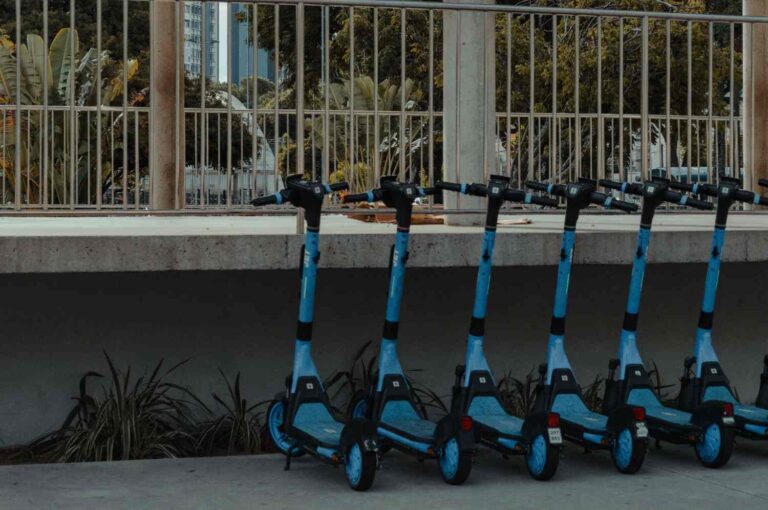
Probably the greatest advantage of an e-scooter is its portability.
Many models are foldable so that you can keep them under a desk, in a closet, or in a small apartment.
This is very useful for commuters who don’t have safe outdoor bicycle storage.
2. Easier to Combine With Public Transportation
If your commute involves a train or bus, an e-scooter can be very convenient.
You can ride the scooter to the station, fold it, take public transportation, and then finish your journey by riding from there.
A folding e-bike can also be used, but it is usually bigger and heavier.
3. Less Physical Effort
An e-scooter doesn’t require you to pedal all the time.
For anyone who would like to get to work without ending up tired or sweaty, this is a big benefit.
It is especially useful when the weather is hot or when you are wearing formal work clothes.
4. Easier for Short Sections of a Long Journey
An e-scooter can still be a good option as part of a multimodal transportation system even if your commute is longer.
For example, you might ride a scooter three miles to a train station, take the train for most of your journey, and then ride another two miles to your workplace.
In this situation, portability may be more valuable than maximum range.
E-Scooters: Cons for Long-Distance Commuting
1. Standing Can Become Uncomfortable
Standing for a long period can become tiring.
A scooter might seem absolutely comfortable during a 10-minute journey, but the experience can change quite a bit after 45 minutes.
Your feet, legs, wrists, and back may become uncomfortable, especially if the scooter doesn’t have good suspension.
2. Small wheels can be difficult.
Many scooters have smaller wheels than e-bikes.
As a result, potholes, cracks, loose gravel, and other obstacles become more obvious.
You have to watch the road surface, especially when driving at higher speeds.
3. Range Can Be Less Predictable
Long-distance scooter riders must pay close attention to battery capacity.
Advertised range is usually determined under certain conditions, and actual range can vary greatly.
Riding at high speed, climbing hills, carrying a heavier rider, or using maximum motor power can drain the battery faster.
For a long commute, choose a scooter with significantly more claimed range than your minimum daily requirement.
4. Limited Cargo Capacity
It’s relatively easy to carry a backpack on an e-scooter, but it can be difficult to transport heavier loads.
Attaching heavy bags to the handlebars can also affect steering and stability.
An e-bike is generally more convenient if you regularly carry groceries or work equipment.
What is better for a ten-mile commute?
For a commute of about 10 miles each way, either option may work, but in most cases an e-bike is more comfortable.
That amounts to 20 miles each day, which is why battery capacity matters.
You can pedal, sit comfortably, carry your equipment, and cope with various road conditions on an e-bike.
A long-range e-scooter can also handle this distance, but you’ll want a model specifically designed for extended riding rather than a small entry-level scooter.
What About a 20-Mile Daily Commute?
Once you’re traveling around 20 miles each way, the decision gets harder.
At this distance, the average e-bike tends to be more appealing because of its comfort and flexible range.
You should also consider whether you can charge at work. Recharging during the day can make a significant difference.
If you choose an e-scooter for this type of commute, look for a model with a large battery, comfortable suspension, good tires, and reliable brakes.
You should also leave a generous battery reserve rather than planning to arrive with almost no charge remaining.
Which Is Better in Bad Weather?
Weather is another important consideration for long-distance commuters.
Both vehicles are also susceptible to rain, strong winds, cold temperatures, and slippery roads.
An e-bike usually offers a more stable ride and has wider tires, which can be useful in poor conditions.
Always refer to the manufacturer’s instructions on water resistance before riding an electric vehicle in heavy rain.
Most importantly, reduce your speed when roads are wet and visibility is poor.
E-Bike vs. E-Scooter: Maintenance
Both vehicles require regular maintenance.
E-bikes have many traditional bicycle components, including chains, gears, brakes, tires, and bearings. These parts may require periodic adjustment or replacement.
Even though e-scooters have fewer moving mechanical parts, the tires, brakes, bearings, batteries, and electronic components still require care.
For long-distance commuters, regular maintenance is especially important because you’re putting more miles on the vehicle.
Regularly checking tire pressure, brakes, battery condition, and other components can help prevent problems during your commute.
Which One Should You Choose?
An e-bike is usually the better choice for long-distance commuting if your priorities are comfort, range, stability, cargo capacity, and versatility.
If portability, compact storage, and low physical effort are important, an e-scooter is the better choice.
Choose an e-bike if:
- Your commute is more than 5–10 miles each way
- You regularly encounter hills
- You need to carry work equipment or groceries
- You want a comfortable seated riding position
- You want the option to exercise while commuting
- Your route includes rough or uneven roads
Choose an e-scooter if:
- Your commute is relatively short
- You need to carry it regularly
- You live in a small apartment
- You combine riding with buses or trains
- You want something easy to store
- You prefer not to pedal
conclusion
In 2026, the e-bike is generally the better all-round choice for longer commutes.
Because of its bigger wheels, comfortable seating position, pedal assistance, cargo capacity, and ability to cope with hills, the bike is better suited to long daily trips.
E-scooters are still a great option for people who prioritize portability. For city riders, a high-range e-scooter can be a sensible choice, especially if their trip includes public transportation or if storage space is limited.
What matters most is choosing based on your real commute rather than advertised specifications.
Consider the number of miles you travel each day, whether your route includes hills, where you will keep the vehicle, whether you can charge it during the day, and what items you need to carry.
For short-to-medium distances, an e-scooter can be incredibly convenient. For longer journeys where comfort and reliability matter most, an e-bike is usually the better investment.
In the end, the best commuter vehicle is the one that you can comfortably use every day, regardless of traffic, distance, and the challenges of your particular route.