E-Bike vs. E-Scooter: Which Is Better for Your Daily Commute?

Deciding between an e-bike and an e-scooter can be quite difficult. Nowadays, both are popular alternatives to cars for short and medium distances, especially in busy cities, where traffic and parking can make commuting frustrating.
You get the same kind of experience as riding a bicycle, but with the help of electric assistance from an e-bike, while an e-scooter offers a small and compact means of transport powered by a motor without the need to pedal. Both options can make commuting quicker, cheaper, and more convenient, but they suit different kinds of riders.
Then, when it comes to your daily commute in 2026, which would be better—an e-bike or an e-scooter?
It all comes down to how far you have to commute, the condition of the roads, the storage space you have, your budget, and the comfort and practicality you need.

A quick comparison of e-bikes and e-scooters
Before looking at the differences in detail, here’s a simple comparison:
| Feature | E-Bike | E-Scooter |
| Comfort | Excellent | Good |
| Portability | Moderate | Excellent |
| Range | Usually longer | Usually shorter |
| Storage | Requires more space | Easier to store |
| Exercise | Some pedaling | Minimal |
| Rough roads | Better | More challenging |
| Cargo carrying | Excellent | Limited |
| Short trips | Excellent | Excellent |
| Long commutes | Better | Good |
| Hills | Generally better | Depends on motor |
| Public transport | More difficult | Easier |
| Maintenance | Similar to bicycle | Can require specialized parts |
Each option has advantages, so it’s worth examining them more closely.
What Makes an E-Bike Better for Commuting?
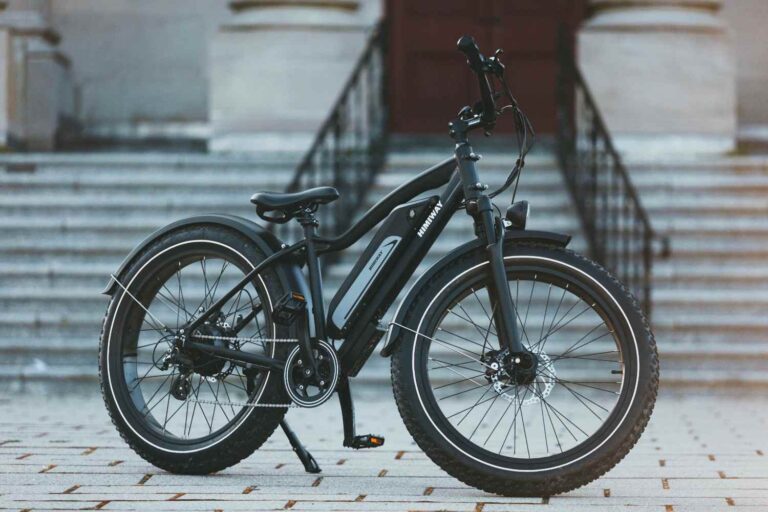
An electric bike is a bicycle fitted with a motor and a rechargeable battery; the motor helps when you’re pedaling, letting you go farther and making hills easier to climb.
A major benefit of e-bikes is their comfort; thanks to larger wheels, a proper seat, and a familiar riding position, they are especially comfortable for long distances.
E-bikes also offer greater versatility, as you can use them for commuting, shopping for groceries, exercise, weekend journeys, or carrying equipment. Many models can take on racks, baskets, panniers, or other accessories.
Another important benefit is that you can keep pedaling even if the battery runs low. Although you will have to put in more effort, you are not entirely reliant on the motor.
For people who commute long distances each day, the flexibility offered by an e-bike can make it the better all-round means of transportation.
What is it that makes an e-scooter a better choice for commuting?
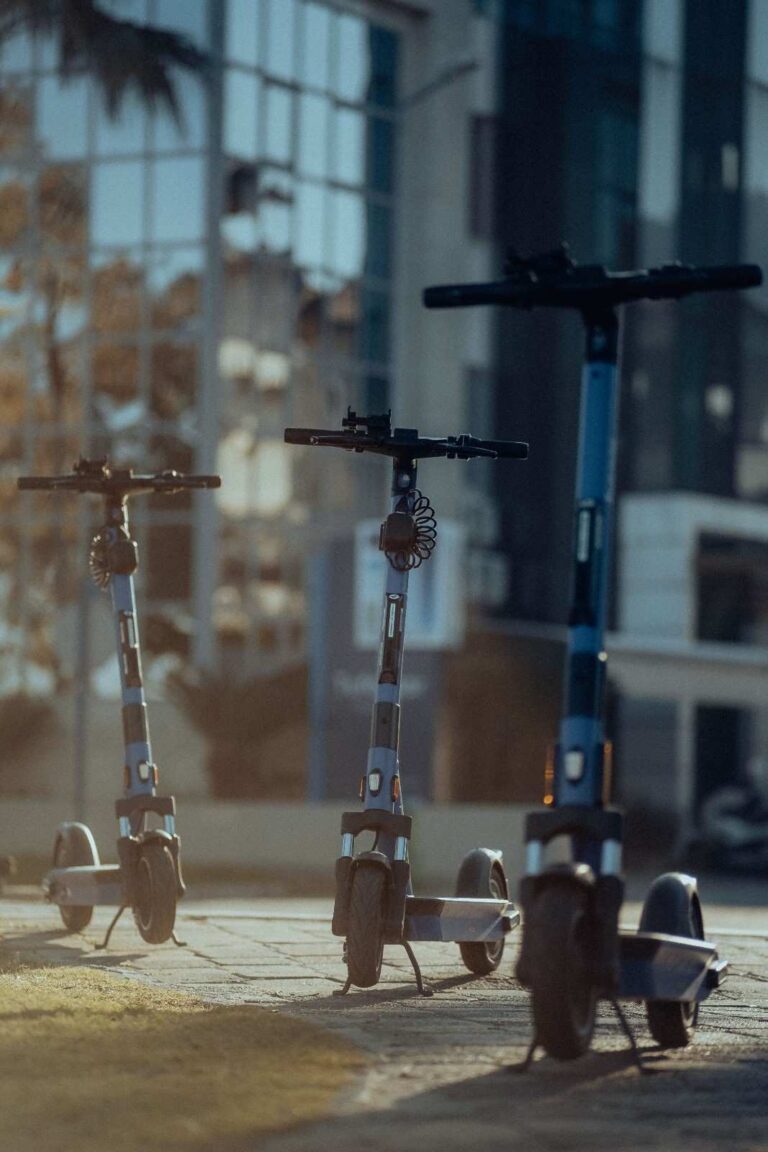
One of the main advantages of e-scooters is that they are more portable than most e-bikes.
Since many electric scooters can be folded and taken into an office, an apartment, a train, or a bus, they are especially appealing to people with limited storage space.
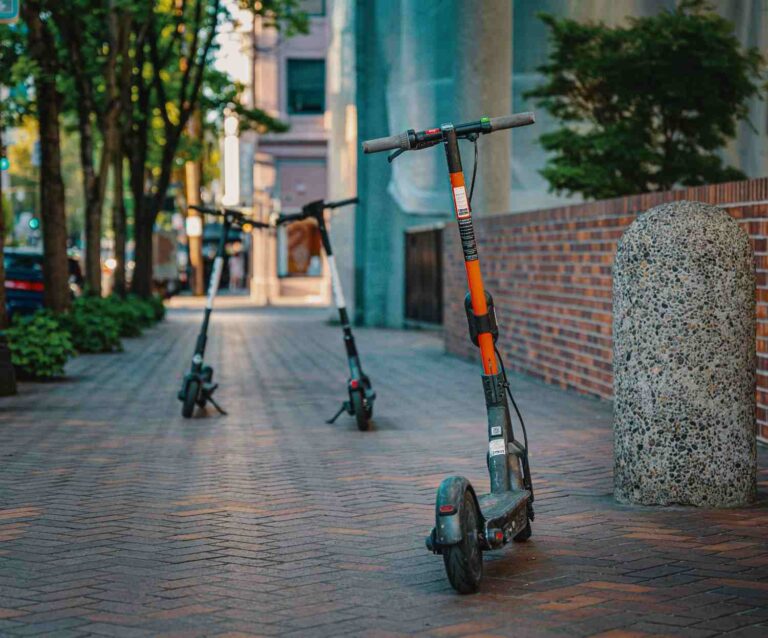
E-scooters can likewise be very good for making short journeys in cities; if your daily commute is only a few miles and your route is mostly made up of smooth tarmac roads, then you might not find it necessary to have a large e-bike.
E-scooters are also very easy to use—you have to stand on the deck, use the handlebars to steer, and control your speed with the controls given.
For anyone looking for a compact means of transportation that will fit easily into a small apartment or office, an e-scooter is difficult to beat.
Which Has Better Range?
When choosing an electric vehicle for daily commuting, range is a major factor.
Generally, e-bikes have an advantage because they usually come with larger batteries and let you pedal if you want to. The distance some commuter e-bikes can cover on a single charge varies depending on the battery, the terrain, the rider’s weight, speed, and the level of rider assistance.
E-scooters can likewise offer a good range, but most smaller commuting models are designed mainly for short journeys in urban areas.
An e-bike could offer greater flexibility if you have to travel a long distance each day; but if your commute is short, the range probably isn’t important enough to make it worth it.
Which Is More Comfortable?
For longer commutes, the e-bike is generally the better choice.
You can sit on a saddle when riding an e-bike, and since it has bigger wheels, they are usually more effective at dealing with bumps, cracks, and uneven pavement. Moreover, some e-bikes designed for commuting also have suspension systems which increase comfort.
You have to stand when you are riding an e-scooter. It is quite comfortable for short journeys, but it can become tiring if you have to stand for a long time.
The small wheels fitted on many scooters also make bumps in the road and uneven surfaces seem more apparent.
Comfort should play a major role in your decision if your daily commute lasts 30 minutes or longer.
Which is easier to carry and to store?
E-scooters have a clear advantage here.
A folding electric scooter can usually be kept under a desk, in a closet, or in a small apartment, and you can also take it into many buildings when bicycle storage isn’t available.
E-bikes are generally larger and heavier in weight; even folding e-bikes can occupy more space than an ordinary scooter.
An e-scooter might be the more practical option if you live on the upper floors and don’t have an elevator, or if you frequently don’t need to take your car onto public transportation.
What is better for hills?
Hills can have a major effect on your decision.
A good e-bike is usually well adapted to hills since the rider can use both their pedaling and the motor assistance. Its larger wheels and steady riding position also aid when climbing or going down slopes.
Although some powerful e-scooters can cope well with steep hills, performance varies widely by model.
If your commute involves a number of steep hills, prioritize motor torque and overall performance rather than choosing based on advertised top speed.
What is better for use on bad roads?
E-bikes usually have the advantage on rough roads.
Bigger bicycle tires offer improved stability and roll over cracks and small obstacles more easily. Additionally, your riding position gives you more control on uneven surfaces.
E-scooters can travel on ordinary city pavements, but their smaller wheels make it harder to go over potholes and uneven surfaces.
An e-bike equipped with larger tires and appropriate suspension is generally the safer and more comfortable choice if your commute involves poorly maintained roads.
What is better for carrying things?
An e-bike is generally the better option if you regularly carry a laptop, groceries, a backpack, work equipment, or other items.
Rear racks, baskets, panniers, and other accessories can be fitted to many commuter e-bikes, and some models are designed to carry heavy loads.
E-scooters usually have a small capacity for carrying goods. While you can take a backpack, fitting a lot of luggage will affect your balance and make the ride less comfortable.
An e-bike offers much more flexibility for anyone who uses their vehicle for more than just commuting to work.
Which One Is Cheaper? Prices vary by
Prices vary by model, but e-scooters generally start at a lower price.
A basic commuter scooter can offer reliable transport without a high upfront cost. On the other hand, higher-end scooters fitted with large batteries, powerful motors, suspension, and sophisticated safety features can be rather expensive.
E-bikes are more expensive since they have bigger frames, more bicycle parts, motors, batteries, and extra equipment.
When you’re comparing prices, it’s not enough to look only at the purchase price; you should also consider maintenance costs, replacement parts, battery life, accessories, and how often you’ll really use the vehicle.
E-Bike vs. E-Scooter for Different Commutes
Short Commute
An e-scooter is a good choice if your trip is only one to three miles each way, sinceit’ss quick, small, and easy to store.
Ait’sbike will also work well, but you may not need its additional range and carrying capacity.
Medium Commute
For a commute of around three to ten miles each way, either option can work.
Choose an e-scooter if portability is your biggest concern. Choose an e-bike if comfort, stability, and flexibility matter more.
Long Commute
For longer daily journeys, an e-bike generally makes more sense.
Larger wheels, a more comfortable seating position, longer potential range, and the ability to pedal offer advantages over most commuter scooters.
Commute With Public Transportation
If your commute involves trains or buses, an e-scooter can be extremely convenient because many models fold down.
A folding e-bike can also work, but it may still be heavier and more difficult to carry.
Which Is Safer?
Safety depends heavily on the rider, vehicle, road conditions, and local traffic environment.
Both e-bikes and e-scooters should be ridden responsibly, with appropriate protective equipment and good awareness of surrounding traffic.
E-bikes generally provide larger wheels and a more stable riding position. In comparison, scooters have smaller wheels that can be less forgiving when they encounter potholes. No matter which option you choose, wear a helmet that fits properly, switch on your lights when visibility is low, and follow local traffic laws.
It’s also important to check the rules in your area before buying. Regulations on speed, road use, bike lanes, helmets, and where e-scooters can legally operate vary by country and city.
Final Verdict: E-Bike or E-Scooter?
So, which is better for your daily commute in 2026?
Choose an e-bike if you want comfort, longer range, better stability, more carrying capacity, and greater versatility. It is generally the better choice for longer commutes, hills, rough roads, and people who want one vehicle for commuting and other activities.
If you value portability, having a small storage space, and the convenience of making short trips around the city, then an e-scooter is a good choice. It is particularly useful for people who live in apartments, use public transportation, or make short commutes.
Thereisn’tt one universal winner.
For a short commute where you need to fold your vehicle and carry it into your office, an e-scooter may be perfect. For a longer commute involving hills, rough roads, groceries, or significant daily mileage, an e-bike is likely to be the better investment.
What’s most important is choosing a vehicle that fits your real way of life; consider how far you have to commute, the state of the roads, your storage situation, your budget, and how you intend to use the vehicle whenyou’ree not at work.
In 2026, e-bikes and your other options are both useful substitutes for driving on many city trips, and choosing the right one can make your commute cheaper, more convenient, and much more enjoyable.